
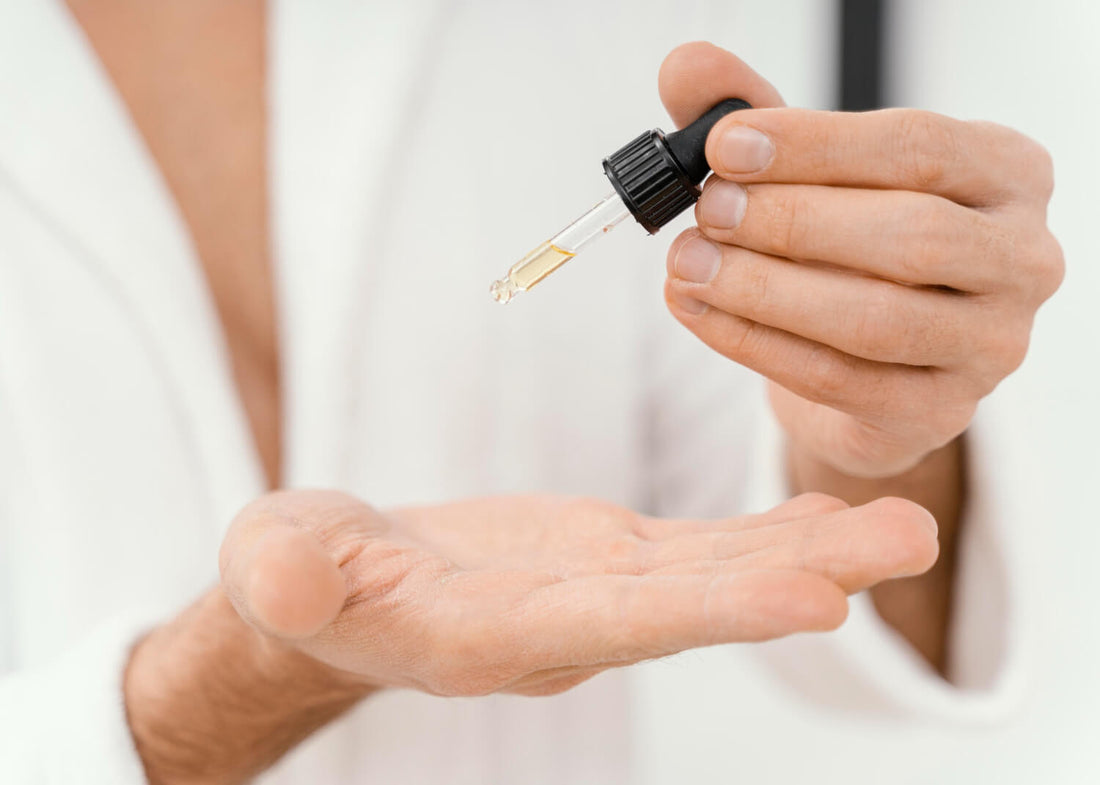
Among the many cannabidiol-based products, CBD oil is one of the most popular, both among connoisseurs and on ourCBD shopping platform.
But you still need to know how to choose it and take care of it. CBD content, type of extract, carrier oil, lab results, storage: all the answers are on the bottle—as long as you know how to read it. In this article, Mama explains how to read the label correctly and store your CBD oil—label in hand!
Read the label on your CBD oil
The label is your oil’s “ID card.” It tells you what’s in the bottle and how the product should be used. Before you buy, take two minutes to read it: it’s the best way to compare products.
CBD content
The percentage shown (5%, 10%, 20%, etc.) indicates the amount of CBD in the bottle relative to the rest of the oil. The higher the percentage, the more concentrated the oil is. To compare two oils, look at both the percentage and the bottle’s volume: two bottles with the same percentage but different sizes do not contain the same total amount of CBD.
If you want to learn more, Mama has dedicated an entire article to the topic of CBD oil concentrations.
Full-spectrum, broad-spectrum, or isolate
The type of extract tells you what else the oil contains besides CBD:
- Full spectrum: The extract retains all of the natural compounds found in hemp, including other cannabinoids, terpenes, and a small trace of THC, which is always below the legal limit.
- Broad spectrum: Most of the compounds in hemp are retained, but the THC is removed.
- Isolate: CBD is isolated and purified, without the plant's other compounds.
None is "better" in an absolute sense: it all depends on what you're looking for. For more details, read our guide , "Full Spectrum, Broad Spectrum, and Isolate: The Differences."
The carrier oil
CBD is diluted in a vegetable oil, known as a carrier oil. Depending on the brand, this may be hemp oil, olive oil, or coconut oil. It gives the oil its texture, color, and some of its scent. Make sure it’s clearly listed in the ingredients, and choose a high-quality oil, ideally one that’s organically grown.
The extraction method matters, too. Supercritical CO2 extraction, for example, produces a clean, solvent-free extract. Mama explains it all in her article on CBD oil extraction methods.
Laboratory Tests and THC Levels
A high-quality oil is tested by an independent laboratory. These tests confirm the stated CBD content, verify the absence of contaminants (pesticides, heavy metals, solvents), and check the THC content. In the United-Kingdom, hemp-derived products must have a THC content of 0.3% or less.
The results should be available to you upon request. The lot number printed on your bottle allows you to identify the test report that corresponds to your product.
Standard Disclaimers
On our oils, you’ll see the statement “This product is not intended for food use.” This is one of the instructions you must follow, just like the precautions for use. Mama has a simple rule: use a product as directed on the label, not as suggested by a tip you read online.
How to Store Your CBD Oil Properly
CBD oil is a natural product. Over time, it can lose its quality, especially if it’s stored improperly. A few simple steps are all it takes to keep it in good condition.
Away from the light
Light—especially sunlight—breaks down cannabinoids and terpenes. That’s why the bottles are made of tinted glass. Store your oil in a cabinet or drawer, never on a windowsill.
Away from the heat
Heat accelerates the aging of vegetable oils. Avoid placing them near a radiator, in a car during the height of summer, or in a hot bathroom. A cool, stable location is ideal.
A tightly sealed cap
Every time you open the bottle, air gets inside and the oil oxidizes a little. Make sure to close the cap tightly after each use, and always keep your oil in its original bottle, with the label still on it.
A time limit to be observed
Your bottle has a best-by date, and sometimes a recommended usage period after opening. Follow these guidelines: once the bottle is opened, the oil won’t keep indefinitely. To learn more, read our article “Can CBD Oil Expire?”
Labeling and Storage: I'll Answer Your Questions
How can I tell if my CBD oil is still good?
Look at and smell your oil. A rancid or unusual odor, oil that has become very cloudy, or a strange sediment are signs of spoilage. If the expiration date has passed or if something seems off to you, it’s best to replace the bottle.
Why don't all CBD oils have the same color?
The color depends on the type of extract, the extraction method, and the carrier oil. A full-spectrum oil is often darker than an isolate-based oil. Mama tells you more about the colors and appearance of CBD oils.
Are CBD oil and hemp seed oil the same thing?
No. Hemp seed oil is pressed from the seeds, which naturally contain very few cannabinoids. CBD oil, on the other hand, contains an extract from the plant, diluted in a carrier oil. These are two different products, with different uses and legal statuses.
Should you keep your CBD oil in the refrigerator?
It's not required. A dark, cool, dry cupboard is sufficient in most cases. If you store it in a cool place, the oil may become slightly cloudy or thicker: this is normal and will go away at room temperature.
Where can I find the analysis report for my CBD oil?
Ask us for it using the lot number listed on your bottle. A brand that can't show you its test results doesn't deserve your trust.
What should I do if I'm unsure how to use my oil?
Read the label again—it’s the official source of information. If you have a health condition or are taking medication, consult your doctor or pharmacist before using a CBD product. And you can always write to us: the Mama Kana team is here to help you make the right choice.
Learn more about CBD oils:
![Trim CBD 🧉 [Greenhouse] a colorful background](http://mamakana.com/cdn/shop/files/TrimCBD_1_62bc19c6-8b2f-416e-aa10-70da357ae351.jpg?v=1720017738&width=533)

![Sour Diesel CBD ⛽ [Greenhouse] a colorful background](http://mamakana.com/cdn/shop/files/SourDiesel-fond.png?v=1750939336&width=533)


